
My Own Man
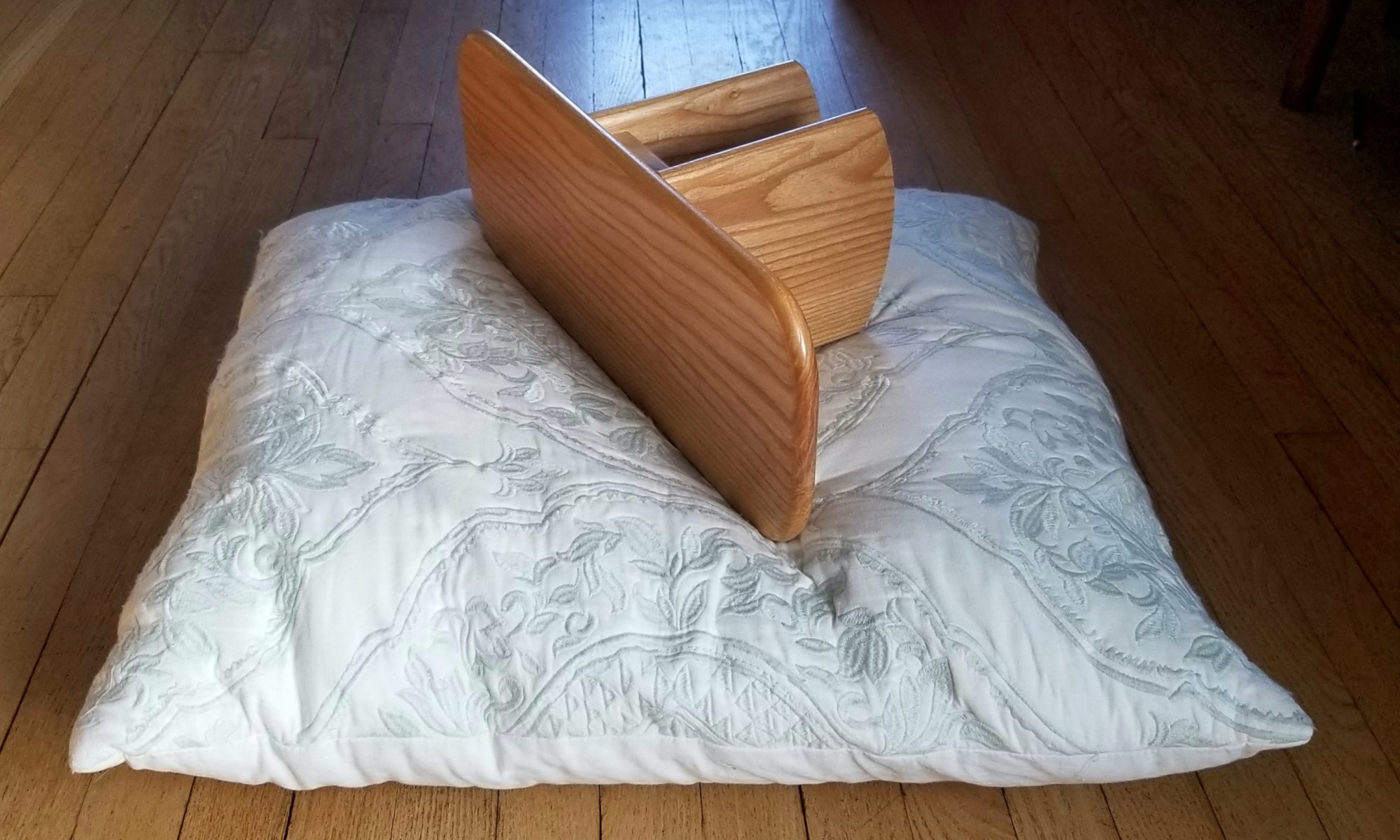
It’s April in 2019, and I’m on my wooden meditation bench, eyes closed, sitting with the dread that has been so long and frequent a companion. Instinct tells me that holding my hands over my upper belly will help. I do that, and it does, but only minimally. I can feel the warmth it generates, and with it a modicum of comfort.
Over our last several sessions, Shannon, my intuitive reiki practitioner, has suggested that I work to disengage myself from troublesome energetic cords that, even in my mid-fifties, still tether me to you and Mom, to Grandpa Brown and his perpetually worried soul, and to crucial others in my life, both dead and living. By disengaging, I’ll be giving this ancestral and situational energy back to you and others who’ve left it with me.
Because it’s your stuff, after all. Your dread and fear, not mine. Granted, I took it on; but I’m giving it back. From where you all are, you can better deal with it anyway. Besides, I have enough disquieting energy of my own.
So, I’m doing this now in meditation, at first visualizing the act of unhooking the many bungee-like strands from my rib cage, strands that trail off into the deep-purple backdrop of space beyond my closed eyelids. But as my desperation grows, I start working physically, with my actual hands, releasing the cords two at a time from my ribs, over and over and over. Soon, I’m reaching into my belly and scooping out handfuls of goopy stuff, tossing it forward as if into a wheelbarrow, sometimes raising it skyward to be taken from me by unseen hands.
Suddenly, a deep, body-shuddering yawn escapes. I sob involuntarily for just a moment, and tears spill. From within, I feel something warm fly up from my pelvis. I can sense a flutter of wings. Whatever this something is, it moves upward and exits through my scalp. My breathing slows after that, and a calm takes over. I feel a bit better.
But I know my work has just begun. There are so many more cords to release into the purple space, oceans of goop left to dredge from my belly. I’ll be back in this spot again and again, it is certain.
***
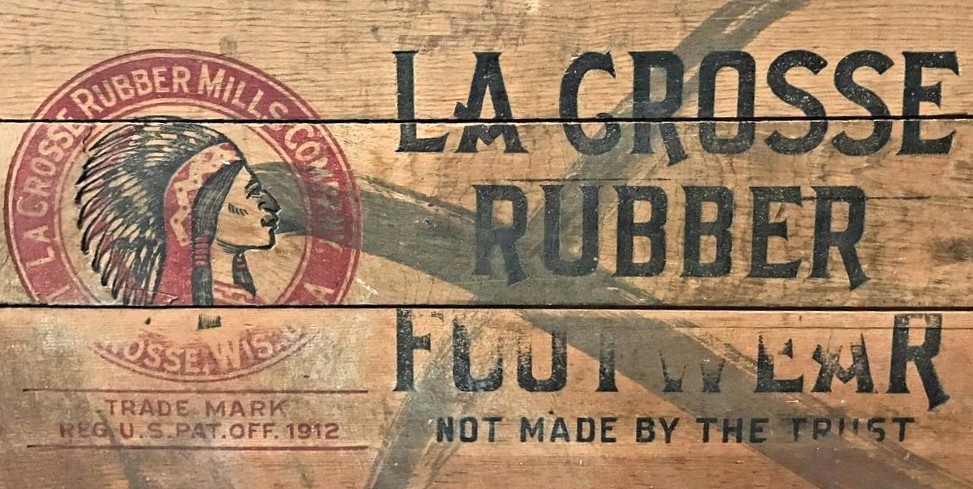
Something Grandpa Brown once told you about his years working at the La Crosse Rubber Mills explains a lot. He would lie awake on windy nights, obsessing that the factory building might catch fire, putting him out of a job. Of course, fire was a possibility, especially in those days. But for him to have spent night after night in a roiling state over a non-event verges on the absurd. Especially since, with each new morning, he would wake to discover the inferno that had so gripped his imagination had once again failed to occur.
Even so, the nightly dread continued. And if Grandpa was anything like you and me, then if he were to have somehow found a way to calm his anxiousness over a workplace fire, doubtless another possibility just as emergent, and just as unlikely, would have taken its place.
That is because anxiety and worry are natural states for us, two of our true ancestral legacies. They kept Grandpa awake on windy nights. They led you to brood for hours while sitting on that kitchen barstool, with a tumbler of whiskey-and-Seven-Up close at hand and your tenth, or twentieth, cigarette burning down. Worry and anxiety have made a home in my own gut for as long as I can remember strings of days, and I feel their weight often, sometimes for weeks at a time. They are the spooks that wake me up hours before my alarm buzzes and torment me as the view outside my window transitions from dark to light. They bring on the doomed feeling that comes whenever I see that someone has called me and left a message. Sometimes I can’t even pinpoint what I’m worried over. I only recognize that the physical tug in my gut is there, and I presume that nothing good will likely come of the near future.
Everyone worries. And anxiety is a natural and beneficial survival mechanism in humans, learned and developed over the millennia. But some of us step over the line in our anxious and worried states. We strap ourselves to them and plunge to unfathomable depths, conjuring obsessions over probabilities that lead us to lash out or act rashly or, just as disastrously, to avoid acting at all and to instead cower in indecision and postponement.
I am guilty of all these approaches, and they have cost me dearly. Worry and anxiety have impeded my development over my life as a child, a son, as a student or employee, as a friend, a writer, a landlord, a parent, a spouse, and as a man. And while there is almost certainly a genetic predisposition to anxiety in our family, I think it’s safe to say that nurture deserves at least as much credit as nature.
One good thing that came out of the awful night of Mothers’ Day 2017, besides the invention of “Wives’ Day,” was a resolve not to return to a place where worry and anxiety would lead me to consider suicide. Somehow, I’d managed for a decade-and-a-half after Sierra Tucson to avoid returning to that place. But the terror and shame I felt on that night brought me back to the brink right quickly.
I began seeing a cognitive behavioral therapist again shortly afterward. This mode of therapy has always been helpful in that it teaches me to check my emotional downturns as they occur, and to challenge the meanings I assign to the feelings that come up. After all, the reason I often go from zero to earth-shattering-crisis in the blink of an eye is not on the merits of a particular stimulus but instead my interpretation of it.
I returned to Al-anon meetings too, not because I had an active alcoholic in my current life (as I did when you and Mom were alive, or when Dylan was still using) but rather because that recent episode with the belt and the squeeze stood as a stark reminder that all of my crucial relationships are codependent relationships, irrespective of a loved one’s habits or lack thereof. For me, codependency began long before I knew that something called alcoholism existed.
For all I know, it may have started on my third day out of the womb, when mom insisted on returning to her beloved flower shop, abdicating the role of daytime caregiver to an ever-changing cast of babysitters. So many new faces looking over me. So many departures. This went on for the first six months of my life. I’m not a psychologist, so I can’t diagnose. However, I cannot but imagine that this episode of Mom making that early break played a part in my emotional development—particularly my runaway sense of anxiety and my codependent, obsessive need for crucial people to love me and not leave me, no matter what the personal cost is in terms of my self-worth, personal health, and agency.
And speaking of agency, I need to come clean here and admit that, while some of my behavioral issues might be rooted in the dysfunctional state of my two primary relationships—namely, to you and Mom—the responsibility to recognize and rectify those issues is mine and mine alone. And I will add that, in so many ways, I have failed until recently to accept and to act on that responsibility, especially as it applies to codependency. If anything, I have set up complex systems to avoid that work altogether.
Exhibit A: It’s not a stretch to explain why I’ve always felt more together, more at ease, and consistently far more confident when I was single. The unattached life is easy for me. I can make all the unilateral decisions I want. I can parent on my own. I don’t have to answer to anyone. The likelihood of conflict dramatically decreases. It’s no wonder that I stayed single for years after each of my first two marriages ended. It certainly wasn’t because I pined for reconciliation. No wonder I didn’t date, or really consider doing so. “Why rock the boat?” became my credo. In program terms, the single life became my “easier, softer way,” my personal imprimatur to avoid the hard work necessary for transformation and growth.
For so long now, I’ve grown to fear whatever relationship I’m currently in, chiefly because relationships are inherently difficult. I’ve decided (based on some deep-down information, some input I’d received long ago) that I lack the will and grit it takes to navigate through relational difficulties. It’s been a gradual evolution of a personality quirk that gained an early foothold and has since grown like a cancer to threaten every crucial interaction I have with another human being.
My reactive behavior is learned, but it comes on so completely and powerfully in tight situations that it feels instinctive. I bypass my own ability to analyze and self-mediate and instead I act out irrationally. For example, I profess to hate conflict, yet I’ll sabotage a significant relationship to the point where it devolves into a state of perpetual conflict, then ponder over how the problem started. I drove myself mad in my codependent relationship with you and Mom, so I began to write you off as nearly dead and longed for the day your actual deaths would come to pass. It was my shining hope for a new tomorrow, where I came to believe that your deaths would release me from the madness, like a miracle cure.
Of course, I’m sometimes driven to long for my own death, not because I really want to die or to harm myself, but because in my twisted state of fear death seems an easier alternative to facing the emotional costs of relationships. As someone who once dabbled in Buddhism, I’m embarrassed to admit that even during that period of dabbling I still worked full time trying to bypass the first Noble Truth.
As I’ve pointed out before, I avoid conflict by tidying up my world—a fool’s errand that only postpones the pain. One of the ways I have tried to accomplish this over the years is to rescue my kids unnecessarily: to shield them, to lie or cover up for them, not out of an understandable parent’s desire to protect them so much as a need to keep a handle on what might erupt if the situation is left to unfold of its own volition. But invariably, my efforts are discovered, or they fail, and then I believe I want to die rather than face the natural consequences of my own actions. The web of toxic codependency I wove that enmeshed you and Mom, then-teenage Dylan, and my second ex-wife contributed mightily to the dissolution of that marriage—my personal contribution to a shared disaster.
To be sure, blended family dynamics are not for the squeamish, and codependency could very well have terminated my marriage to Katie too, given a year or two more for the insidiousness to set in. Rampant codependency is an equal-opportunity relationship killer. It will strike us down, no matter how evolved or emotionally well-equipped we believe ourselves to be. I know I might appear to have gotten my act together in other realms of my life, like sobriety or work ethic, but make no mistake: I’m a newbie at recovering from codependency. Some days, it’s one step forward and two steps back.
Still, with every march and retreat, and every effort to claw my way back over ground lost, I’m reaping wisdom. I catch myself in the act of self-sabotage sooner, and more often. To my delight, I’m also getting bad at bullshitting myself. And I’ve come to realize I can’t bullshit Katie either, because she’s already done her work to get where she is. She’s not having any of it—a personal resolve and strength of hers that both drives me nuts and leaves me realizing how fortunate I am now to have her around on this journey. She might be sixteen years younger than me, but in so many ways she’s my ideal for maturity, wisdom, and healthy living.
So, I still have much to learn. But it’s happening, day in and day out, and that’s a step in the right direction.
***
Katie is crying as she scribbles furiously on a sheet of paper, taking dictation from the afterlife. She never knew you or Mom, yet even she senses that something beyond rational explanation is going on in the small office of Kat Miller, psychic medium. Kat sits across a desk from us with her eyes closed. She’s talking non-stop in rapid-fire tempo, describing what she sees, relating what she hears.
“They’re here already,” she had informed us with a laugh shortly after we walked in. My skeptical mind kicked into vigilance mode immediately. Of course a medium would say something like that.
I’d visited psychics before over the years. And while I do believe that a person’s consciousness remains intact when it leaves the body of the deceased, and that certain people possess the extrasensory acumen to establish contact with it, I’ve also learned through trial and error that some psychics are, well, more genuine than others.
One seer I’d visited in Peoria years ago met me at my motel room wearing a cowboy hat, which he removed and placed over the spot on his arm where his left hand would have been if he’d had one.
I was down there trying to locate information on Grandpa, and my sources on that trip ranged from the conventional to the paranormal (in this case, a one-handed clairvoyant in a Stetson). We sat down in the room, and I showed the gentleman some items he’d told me ahead of time to bring down: physical possessions of Grandpa’s like the silver pocket watch he’d gotten while working for the railroad and various photographs of him. He held the watch in his only hand and closed his eyes. Then he set it down and examined one of the photos for a long time, a shot of Grandpa from the 1950s showing him sawing a plank of wood. The sleeves of Grandpa’s cotton work shirt are rolled up, showing his muscled forearms (even in his sixties he was strong as a bear). He’s glaring at the camera, puffing on a cigarette held between tightly closed lips, and his tanned and weathered face betrays a lifetime of toil.
The Peoria psychic closed his eyes again as he seemed to drift between worlds. A few seconds later his eyelids opened, and he looked at me in all seriousness.
“He was a hard worker all his life,” he said with a dramatic flair.
I’m not sure whether I physically rolled my eyes, but I certainly did so in my mind. And the rest of the session proceeded much along the same lines: entertaining but not entirely convincing.
So, yes, given experiences like this I was initially skeptical of Kat Miller, the psychic medium. But then she got started with our session and began providing details she noticed from behind her own closed eyes. Kat saw Mom picking at her thumbs, and when she imitated the action with her own hands, it was just like watching Mom doing it. The exact same frantic and thorough movements intended to peel and pick away the skin around the nails.
Thing was, Kat knew nothing, absolutely nothing, about Mom’s obsessive excoriation. This was the first time we’d met her in person. Moreover, there was no initial discussion of family details. And the descriptions and actions that followed were just as on-target as the first ones. My suspicions began to weaken, and I sat back in amazement to watch and listen while Katie took notes. Kat relayed Mom’s concern about her jewelry, fiddling with her own ring finger in imitation of what she saw (as you well know, Mom was always vain about that rock on her wedding ring). But the fiddling stopped as soon as I mentioned the rings and other valuables were safely stored in a vault at the bank.
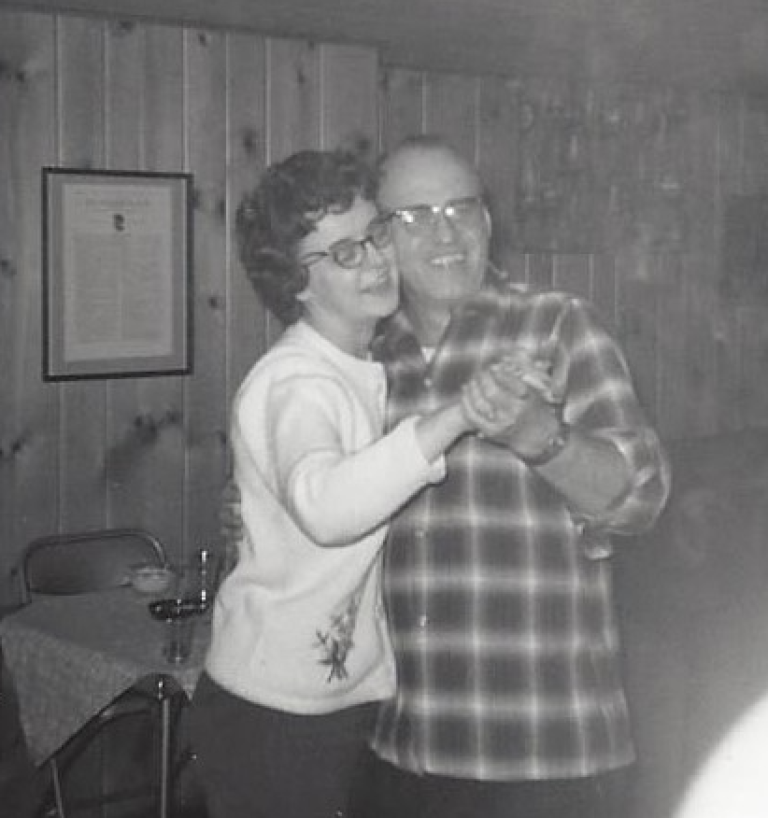
She observed you two bickering back and forth at intervals during the session, snipping at one another like you often did in the kitchen where, for some reason, many of your arguments played out. Listening to Kat, I could almost hear Mom muttering “you horse’s ass” like she often did. But then Kat also caught a glimpse of you and Mom dancing like youngsters in love, which floored me because I’d only recently rediscovered a picture of you doing just that, years before I was born, at a basement party in the home of Mom’s brother, Bob, in Milwaukee. Again, Kat knew nothing of the photo, to say nothing of the likelihood that you’d ever danced together like that. Yet the description of what she saw matched the content and spirit of that picture to perfection. And the observations continued, each one as surprising and convincing as the last.
Then the messages started, and boy did you have some for me.
You said you were sorry how certain things played out in our life together. You realized now that you had treated me and Mom wrongly at times. Apparently, you learned the hard way after death, relating through Kat that before you could completely pass over into the afterlife you first had to experience these same trials in order to right the balance. You told me to keep on writing, and even more specifically, you charged me to write our family story to completion and to pull no punches in my assessment. (I should note that, at the time of this first session, Kat Miller had no idea that I was a writer, nor did she know I had only recently started crafting what I’d hoped would be a book-length manuscript about just that.)
You said you loved me, that you were proud of me. And the clincher, the one thing in my whole adult life that I absolutely needed to hear, came when you told me that I was in the midst of becoming the man that you were never able to be.
 Rick Brown Writes
WOW
LikeLiked by 1 person
Finally able to finish reading chapter 13 and this last one. Glad you were able to complete your family story. So much of your dad reminded me of my father-in-law. We are in Coon Valley for two months and looking forward to exploring some of our childhood places. So far have only gone for a long walk on Goose Island. Wishing you the best and hope you will continue with your writing.
LikeLiked by 1 person
Hi Judy! There are still two more chapters to go. Thanks so much for hanging in so far! Enjoy your stay back in the area.
LikeLike
Your writing in these chapters has moved me to tears. You seemed to not see what a wonderful human being you are. I’m blessed to know you, as is anyone who calls you friend. Love you Rick.💕
LikeLiked by 1 person
Back atcha, Annie! And thank you for reading and, of course, for commenting.
LikeLike
More interesting and great writing ! I hear it all and am happy for you for where you are at. As I told you once before since I learned about Katie and have seen you with her she is your happy place in life !! Keep on keeping on !
LikeLiked by 1 person