
A Wish to Die
There is a funny story in my present life that is only partially told, and the reason it’s partially told is because, until now, I have chosen not to reveal something crucial (and not at all funny) in the telling.
It goes something like this: For the last couple of years, there has been a new holiday at our house. It’s called “Wives’ Day,” and it falls on the day after Mothers’ Day. I know you’ve not heard of this event, since it came about in 2017, and very few others know about it. This is understandable since I invented it. As far as I know, only my wife Katie and I observe Wives’ Day.
And boy, do we observe it.
I do try to spread the word of Wives’ Day—to check-out counter workers where I’m buying a blank card and flowers on a Monday in May, and to friends and acquaintances who haven’t already heard the amusing—if-you-look-at-it-a-certain-way story about the year that I forgot Mothers’ Day.
In my defense, I hadn’t forgotten, though Katie’s version of the tale is that I had. What occurred is that I’d neglected to prepare anything for what is a super important holiday for my dear wife. I’d been sick all that week and hadn’t left the house, and the last thing I was thinking about was any activity on the coming weekend. Consequently, I didn’t buy flowers. I didn’t purchase a gift. I didn’t get a card. In short, I failed miserably. As she rightly points out to this day, even if I was sick that week, I could’ve ordered flowers, or bought something through Amazon and had it shipped in plenty of time. Hell, at least I could’ve given her a shout-out on Facebook.
But the shameful fact is that I did not. And by the time Mothers’ Day rolled around, I was out of time to scramble and put together anything meaningful, other than a meal—which, it so happens, I dropped while taking out of the oven. The dogs gobbled up most of it before I could salvage it.
All in all, it was an awful act of neglect, and nobody’s fault but my own. I might as well have forgotten about Mothers’ Day. The negative effect was the same.
My neglect delivered a blow like few others could, and Katie’s reaction was commensurate. There were no wild histrionics like you might expect on television or a romantic movie, though. No throwing of plates or shouting. Just a deceptively quiet, but wholly palpable sorrow. I had failed her. Along the continuum of love feeling she reserved for me, her husband, there was suddenly and quite obviously a break. Whether that break was reparable I truly did not know at the time. But as best as I could tell, her regard for me had evaporated. As best as I could tell, I had lost her.
Here’s the part nobody knows about:
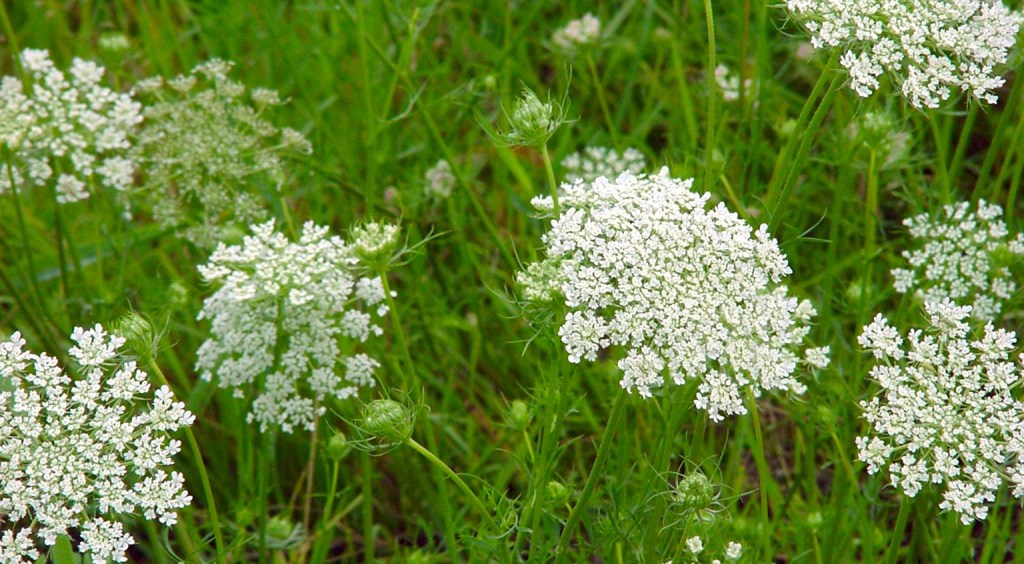
Later that night, after everyone else had gone to sleep, I stepped out onto the screened-in porch that overlooks the Mississippi River valley. It’s a glorious view by day, and after sundown it is no less spectacular, for the night skies from our Minnesota bluff vantage are mostly unaffected by the dim glow cast up by the lights of La Crosse, the city of my birth, which lies just across the river. Stars I’d never seen are now available to my wondering sense on any given clear night. Crickets sing among the tall grasses we’ve allowed to grow along our southern property line—a natural garden delight that blooms later in season with chicory and Queen Anne’s lace. And, of course, there is the flicker of fireflies up here too—a warm weather light show available for my comfort and grounding if I avail myself to its gifts.
But that night I wasn’t noticing any of this; and my mind was bereft of thoughts of gifts, most certainly gifts receivable. Instead, I released my braided leather belt strap and removed it, loop after loop, from around my jeans. I sank into the nearest chair. Threading the strap back into the buckle frame, I formed a loop, which I placed over my head and around my neck. I drew the strap through the buckle until it was secure against the skin, then wrapped the remainder around the neck once more.
With both hands grasping what little of the strap remained free, I pulled down slowly and steadily. My first feeling as it tightened was a pressure within my head, as though I was holding my breath by force. It’s a rush like the one I’d always felt initially when I was a kid and out of pot—in my old days of stoner ingenuity, where I would scrape the inside of my pipe with the swing-out file of a metal nail clipper to extract the tarry resins. I’d then heat the resins to a bubbly simmer with a lighter’s flame, and as the smoke rose, I would take it in through my nose, squeeze the nose tight with my thumb and forefinger. My vision would grow dark and starry, and I’d begin to pass out.
In the old days, the rush was where the process ended. I was going for a high back then, not pushing the boundary that separates experiment from suicide. But here and now, as my hand-held noose tightened further, I progressed from a faint-y feeling to the grip of understanding that no air was able to enter my body. An innate panic ensued as I realized that I was at a precipice. For if I lost consciousness now, it was likely if not certain that the belt would remain tight, and I would strangle. The choice was mine, but it needed to be made quickly.
I loosened the strap. But I didn’t feel any better. In fact, knowing I just did the very thing I’d vowed at Sierra Tucson never to do to again only ramped up the desperation I felt already.
Then too, there was the sick, alternate-reality paradox of my having just also failed to carry this night’s act through to a fatal conclusion, which carried its own sick onus.
I went back inside, numb and zombie-like as I always get in the throes of despair, closed the house for the night and fed the cats. I crawled into bed with Katie, who was asleep, but then I sat up against the wall for what felt like hours. As for the belt, I put it back in the closet. I was too beaten to consider using it again that night. If fate wanted to take me in my sleep, though, I would’ve been okay with it. A lazy man’s way out. The easier, softer exit. Suicide for cowards.
***
Out of all the nights and days like this in a half-century of living with generalized anxiety disorder and major depression, why has it not happened? Why have I not carried the act through? Am I a coward? Is it cowardly to shy away from administering my own death in desperate straits? Or, rather, does cowardice lie in seeing the process through, the act of taking my own life—to hell with whomever I scar in the process? To hell with any precedent I may have set for the way descendants handle things in their own darkest hours. To hell with taking a moment to consider the likelihood that this present desperation will pass, and that a new and better day will open out—maybe even tomorrow.
I suppose the answer depends upon the person. I’ve known people who have committed suicide, and I can only guess at their private mental process leading up to the act. Of course, some may have died by “accident”—a dangerous and dark pseudo-experiment (much like mine) that for whatever reason led to their deaths. Perhaps it was a tightened noose that put them out before they could loosen it. Or maybe some other miscalculation, like taking a pill or two beyond the point of no return. Sort of an accidental overdose, sort of not.
But for others there is no equivocation: they are hellbent to carry out the deed to its intended conclusion. Like my great-uncle, Charles Ingersoll, who placed a shotgun barrel to his chest one late-summer day and put the travails of life behind him. Or his first wife, Mary Edna, who sought escape from her own private torment with a lethal dose of poison—an act that left two little children motherless. For all of the pain it had to have caused the people they left behind, for all the unanswerable questions their acts gave rise to, for the behavioral implications their suicides might well have unleashed upon future generations, theirs were clear and significant feats of decision-making: active choices to breach the very threshold that I have so far avoided crossing.
So why them and not me?
My go-to reaction whenever it becomes clear that I have failed someone who is crucial to me is to conclude that I’ve lost their respect and love. At such times, and without exception, I will condemn myself utterly for it. And since the precipitating event is often rooted in my having somehow not stood up in the presence of a stronger personality, or in my having shied from potential conflict in general, I rank myself as less than a man for my failure. In childhood terms, though equally as self-damaging today, I am a sissy. Or, as mom sometimes chided me—even as an adult—a “patsy.”
This is an unbearable place; and all too often at this point my first inclination is to want life to end.
But is that really accurate? Maybe that is the easy, knee-jerk answer that is not an answer at all. It is more accurate to say that at times like this, I just want the pain to stop. That pain includes everything: The painful situation at hand. My racing, frantic mental ticker tape of shame and self-hatred. My fear of losing love. My fear of having irreparably damaged a relationship.
But most powerful and painful, I am often left with the suspicion (based on decades of repetition) that I will only continue to find myself in these horrific codependent straits time and again. It is here, especially, that I arrive at the notion that, if stopping all this means stopping life itself, then that is what it means. Screw the fallout.
But again, it has not happened. As yet, I have not carried the process through to actual suicide.
I’ve been at this place more times than I want to admit, whether it has led to a belt and a squeeze. And I know there is a difference in genuineness between a private act like the one on my porch on that Mother’s Day night and the more public behavior I’ve come to call “suicidal brinkmanship”—the threat of suicide as a tool of manipulation, whether it’s to garner attention, to get my way in some crucial argument, or—as in my first memorable try at it—to resolve a conflict that seemed otherwise out of my control to stop.
I was ten that first time, and we were sitting at the dining room table. You and Mom were once again enmeshed in battle, which always triggered a visceral terror in my belly that a divorce was imminent. In those days, the institution of divorce was becoming more and more common as an antidote to troubled marriage, perhaps not yet in the realm of my everyday life (though there had recently been a few ominous exceptions in our extended family, and even in our neighborhood), but there were certainly plenty of examples in popular culture.
The high-profile breakup that comes to mind in contemporary culture is that of Sonny and Cher. We watched their show every week on the TV in our sunken living room that also served as a dining area. In terms of 1970s variety shows, it was in our top tier of favorites, just one place removed from “The Carol Burnett Show.” Watching Sonny and Cher over the years, I never once detected anything from their on-screen demeanor that suggested anything in their relationship was awry. That is until one day, when I was listening to the radio in the living room and a DJ was introducing one of their hits, I had to sit down in shock when he revealed that the two had just joined the growing list of celebrity couples relocating to that existential place the tabloids called “Splitsville.”
Sonny and Cher were getting a divorce.
It seems ridiculous now to think of it, but the prospect of yours and Mom’s own marriage going the way of Sonny’s and Cher’s competed with the prospect of you or mom dying. But it’s true: Both potentialities, divorce and death, ranked at the top of my exhaustive list of assaults on my personal security—that wasp’s nest of threatening outcomes over which I lacked any power to prevent.
Or did I?
I don’t remember what we were having for supper the night of your argument, but it must’ve been meaty, because I grabbed the nearest sharp object—a black handled, serrated steak knife—and held it to my chest, tearfully threatening to plunge it home if you didn’t stop fighting that instant.
Did I know then that the knife in my grasp would never deliver the lethal result I threatened to inflict on myself? More a kitchen utensil than a weapon, the knife blade was long and narrow, flimsy if pressed vigorously against a surface that offered even the least bit of resistance.
Nevertheless, the ploy served its purpose. Your bitter voices mellowed immediately. Mom placed her hand on my shoulder as I sniffled over my dinner plate. And you sought to soothe me with reassurance that, despite what appeared to be unfolding, you both still loved one another and would be together always.
And for my part, I had gained a valuable lesson on the efficacy of suicidal brinkmanship. It was to become my go-to tactic whenever I despaired that the uncontrollable actions of others might somehow shatter my world.
***
So many questions.
Did you feel a similar desperation in those times when you yourself claimed to want to end your life? And was there a distinction between your own public suicidality and any private inclination to take a jump or pull a trigger? Might you have inherited some familial, genetic tendency to consider killing yourself—an unspoken, undetected predisposition as lethal and potential as one for a particular strain of cancer?
Might I have as well? Are we the genetic benefactors of something that has blighted select branches of our family tree? Or, conversely, if it is nurture rather than nature, then how did that learning come down to us—especially considering that so little was known of our ancestral past?
Did Grandpa harbor a tendency to consider suicide and you witnessed him voicing it? If so, did he learn it in his own murky, largely uncharted early life? And if so, when and from who? Another avenue of inquiry might be directed into the mental health issues suffered by Grandpa’s brother, Charles Ingersoll, and their mother, Mary. At the end, Charles shot himself, while Mary succumbed to “exhaustion” in an Illinois state mental hospital. Were there episodes of suicidality along the way that were never documented? Were her mental health issues the reason that Grandpa left home at an early age for the windy plains of North Dakota? Might he have attempted a geographical escape from all of this, but unwittingly carried the tendency with him into his new life?
Most of these questions may never be answered to satisfaction. However, they are all valid and worth considering, no matter whether our tendency came to us by way of genetics or social conditioning.
And since I never asked you during your life, I cannot now know the extent of your private suicidal ideation. But I’d heard you voice a wish to die so frequently that it rings like a chorus in my memory.
I stood witness to your threats of suicide as a manipulative tool. You never owned guns in your life, but your friends did. And that was a fact you made clear to Mom on at least one occasion, when you were going off on a fishing trip to Canada with some drinking buddies. But that wasn’t the only time you lobbed a suicide bomb in her lap and left the house for points unknown. I recall many occasions when Mom would call me at home or work, frantic because you had stormed out of the house, yelling that you were going to end it all.
Of course, I committed similar acts of passive aggression in my own life—acts of emotional terrorism that I visited on my first two wives and a host of girlfriends that preceded them. I wanted to kill myself, I’d say—or I’d cry, because it was often through the tearful heat of fury at self or situation that suicidal brinkmanship presented, like something reduced to its essence in a sizzling saucepan. I might’ve sincerely wanted to die, but my making a public spectacle of it robbed it of its icy genuineness, because in calmer moments the victim (namely, whomever I was threatening with my death) could always play back the scene in their heads and see it for what it was: a desperate, cruel and selfish ploy. Like I said, I may have wanted to die in some way or form, but that death wish was only a means to an end that could be accomplished in other, less final ways. Really what I wanted was for my frantic mind to stop torturing itself with thought. I would do anything to stop the enmity I so intimately sensed around me. I wanted to regain the love I convinced myself I’d lost. I wanted to turn back time and take back some unforgiveable thing I’d said in a fury. I wanted the attention that love or a simple “it’s okay” would bestow.
I wanted to stop the fear in my soul.
That’s really the root of it for me: fear. The truth is that I’ve been afraid for most of my life. It seems such a craven, undeveloped thing for an otherwise fit, accomplished man to admit. But there it is.
And the original bogeyman was you.
 Rick Brown Writes
But how did Wives Day evolve from this negative? I feel like you’ve left me hanging in mid-air.
LikeLike
Nobody knew about what had happed that night on the porch until several years afterward, when I wrote this manuscript. I never told anyone. I made up Wives Day as a means of atoning for my negligence re Mothers’ Day. Sometime later, after things settled, the idea of Wives Day took on a lighter tone. But, as I said, we still celebrate it every year now. Sorry if I wasn’t clear.
LikeLike
An interesting chapter and I am happy to hear you have never gone through with your tendencies. Wonder what our daughter would make of it – she is a clinical psychologist.
LikeLiked by 1 person
Thank you, Judy. I’d be interested to know as well.
LikeLike
A very sad and scary chapter, but as you said it needed to be told as well as the good stuff ! Glad you’re still here and with your awesome wife to keep you happy.Keep on keeping on !!
LikeLiked by 1 person
The great thing about suicide is it lends itself to procrastination as well as any other behavior of human kind. “Shit, if I am ready to pull the trigger now, it frees me up to try anything that I might have lacked the confidence to try before. Or anything that seemed too dangerous or crazy.” It is a “get out of life free” card I have carried one in my back pocket since an incident that happened when I was 22. It has given me peace of mind thru good times and bad, knowing that I control the limiting factor on how bad my inner or outer life can get. Very interesting to read about your experience with the same concept.
LikeLiked by 1 person