

Boundaries
Your life energy, whether convivial or dark in its expression, was a thing of magnitude. You could charm just about anyone—women, bartenders, bankers, even judges. Just as powerfully, you could badger, threaten, or pressure a person to your advantage, systematically breaking down their will to resist. Or you might do an end-run around someone to get what you want—without stopping once to recognize that they might have a dissenting opinion or even the right to possess one.
Not only was the idea of personal boundaries something you didn’t respect, but it seemed as though you weren’t even aware such things did or should exist. You made executive decisions with my life, and the lives of others too, only to be surprised, flabbergasted even, when we failed to praise or thank you. Like the time during the late-1990s when I returned home, to a little house that I owned, to find you up on a ladder in my yard, with a drinking buddy standing next to you. You were both sawing limbs off an old fruit tree that stood along the property line between my house and a neighbor’s. One of my pleasures back then was to look out at it through my kitchen window. It stood hale but spare of foliage, and its gnarled, black branches provided perch space for birds and lent credence to my belief that it was a physical manifestation of poetry.
The fact that you were paring down this piece of natural art without any thought of consulting me was bad enough. But it wasn’t even my tree!
I stumbled out of my car, so furious was my effort to stop you.
“Get the hell down from there!”
You shrugged, grumbling that the tree was a mess and that it needed pruning. But you stepped down as ordered, folded up the ladder, and you and the friend departed for some other adventure, leaving me to apologize to the neighbors and explain what had happened to their property.
You often made outrageous and at times ridiculous demands of me. We touched on the day you called and shamed me into getting a haircut when I was twenty-seven. I’m still astounded I didn’t tell you to piss off and mind your own damn business then.
But even that incident pales in comparison to the time when you called out of the blue to lobby me to get a vasectomy. I had just begun dating the woman who would become my second wife and, a couple of years later, the mother of Sophie. At that time, you were terrified of the prospect that I might have another child someday, the addition of which, you felt, would contribute to the whittling down of your fortune over time. I’d already had one child, you alluded, I didn’t need another one. To sweeten the deal, you generously(?) offered to assume the cost of the procedure. I could only stand there in bewilderment, holding the receiver to my ear. My mouth went dry, and I could barely pipe up to voice an answer. Thankfully, with a nervous chuckle, I declined your offer, and the matter soon dropped.
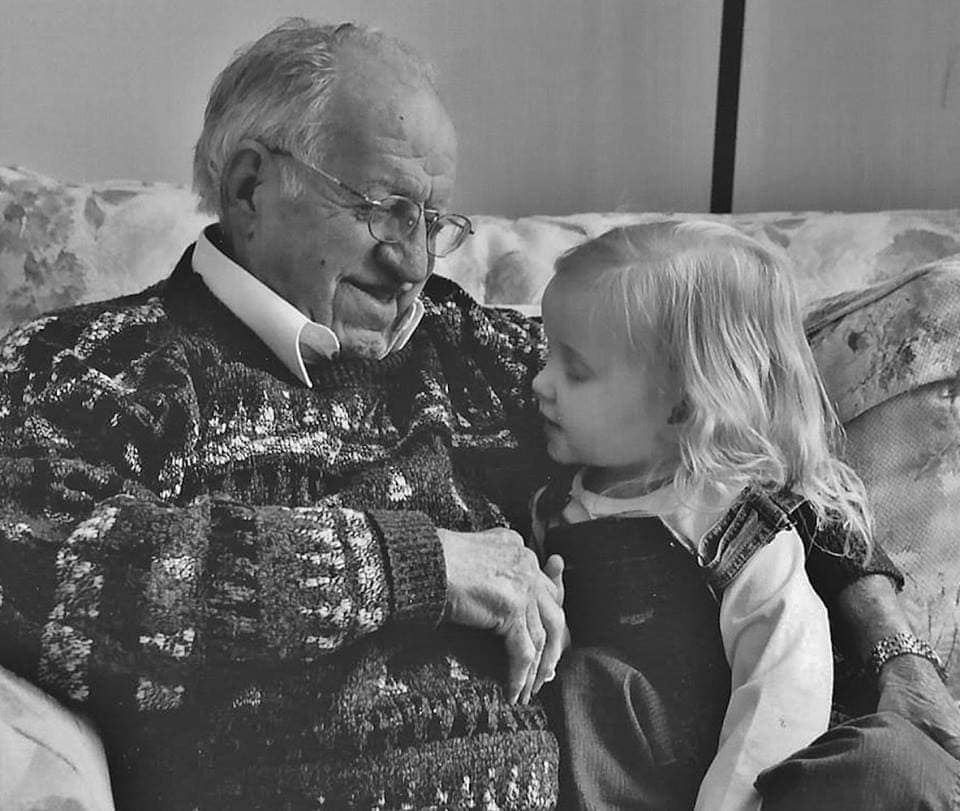
If I would have bent to your will at that time, though, your dear granddaughter, whom you came to love in the last five years of your life, would never have been born.
***
During my twenties and thirties, and especially after I sobered up and got better at observing myself, I noticed how deeply I dreaded picking up the phone for fear that you might be on the other end, demanding I drop whatever I was doing (for, really, how important could my time be?) and do your bidding.
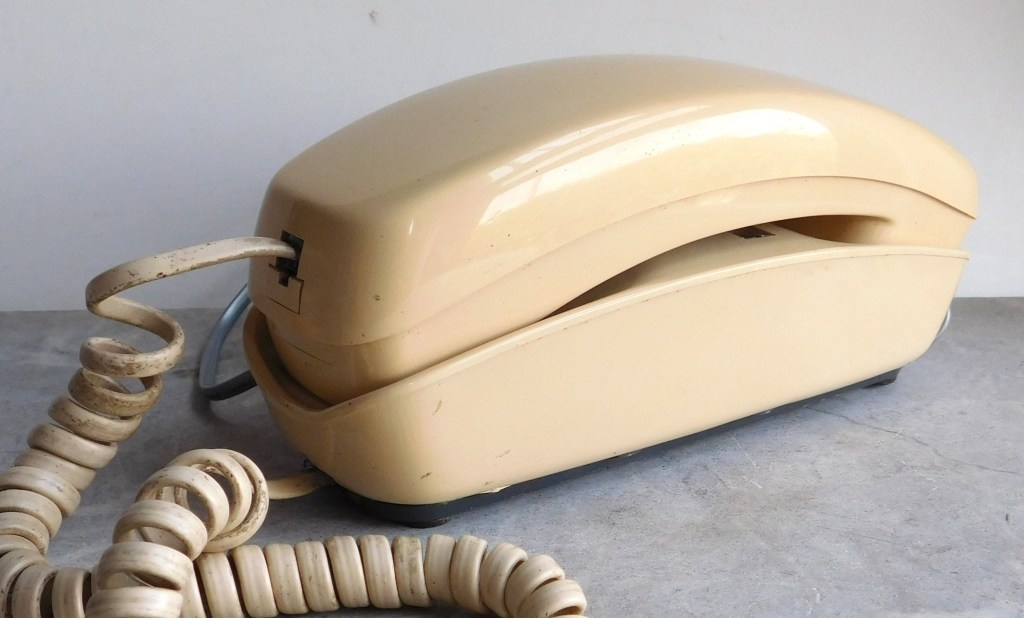
To this day, I tense up whenever I hear a phone or a doorbell ring.
Strangely (since the technology was not readily available in your lifetime), even the chime of a text notification on my smartphone sets off a wave of anxiety. What now? is always my first thought. And even though the message on my screen will never be from you, my reaction mainlines back to you and our relationship.
To any human being with reasonably-developed emotional health and ethical sense, “personal boundary” is a self-evident concept. Of course people ought to respect and love themselves enough to not let people walk all over them or compel them to do things that go against their core beliefs, values, and wishes. And certainly we should acknowledge and respect the values, beliefs, and personal autonomy of other people in our lives.
I did not grow up with a healthy understanding of the concept, however. Looking back, I realize that nothing like this was ever discussed or even considered within our little family unit. Your snowplow approach to interpersonal relations, and to a lesser extent Mom’s too, defined normal for me. Consequently, I have spent much of my life knuckling under to people with especially strong personalities, or even to those with louder voices or what I might consider to be physically imposing characteristics. Only in recent years have I discovered, largely from being told about it by others, that such ready capitulation on my part is not normal, to say anything of being desirable.
Today, I better understand that the reason I dreaded picking up the phone and finding out it was you was because I realized (as you surely must have too) that you could influence me with the pitch, tone, and volume of your speaking voice more often than not. You didn’t need to be in the same room, or even in the same state. All you needed was to deploy the aural equivalent of your backing me up against the wall with a challenge to fight. If I displayed even a modicum of resistance, you’d demand to know why I could not or would not do your bidding. And that “why?” was not an invitation to discourse in civil tones over the pros and cons of an issue, a situation governed by agreed-upon rules of engagement. This was not formal debate. Instead, your “why?” was a bludgeon.
And on the rare occasions when this tack didn’t work to your satisfaction, you could always deploy the hang up or, if we were talking in person, the door slam. The hang up and the slam were like a judge’s gavel. That’s hard enough a thing for a kid to face. Nobody can scare you like your parents. And that fear carries forward. For, even as an adult I found it excruciatingly hard to stand strong against something as powerful as your hang up or slam and the heavy, damning message they carried.
Once, though, during the final year of Mom’s life, I did take a stand against you. And like the time when I quit the flower shop, it would shake the foundation of our world for a while.
But before I go on, I need to back up and fill in some gaps, because something like this doesn’t come out of nowhere.
***
During the summer of 2002, I had spent a month down in Arizona, at Sierra Tucson, a residential treatment center for addictions and behavioral health issues. I was there for the latter, having been severely depressed for several years by that time, with frequent if not daily suicidal thoughts. Plus, I was in a disaster of a second marriage—a disaster for which I’ll admit that I had equal responsibility.

Sierra Tucson was a beautiful place to heal, to learn and recharge. Located in the hot Sonoran Desert, with the Santa Catalina mountains looming in the distance like the spiny back of a sleeping dinosaur, the facility resonated with wonder and spiritual energy. During those twenty-eight days, I bonded with other serious, like-minded folks who felt the vibe like I did and wanted desperately to change their life courses. We meditated, practiced yoga, attended grueling but necessary group therapy sessions, availed ourselves to alternate modalities such as Eye Movement Desensitization and Reprocessing (EMDR), mindfulness training, and equine therapy.
Every evening after supper, in the glow of the setting sun, a group of us participated in the tradition of “Mayan prayer,” in which we would stand in a circle to offer thanks and greetings to the seven directions (north, east, south, west, sky, Earth, and inward) and invoke the healing and teaching powers of our ancestors and spirit guides. The ceremony concluded with all of us greeting one another with embraces and the lovely salutation, “honey in the heart.” I still look back fondly on those evenings, and I miss them. Honey in the heart.
On the practical side, I learned about codependency down there, and how it applied to me. Specifically, it is the matrix within which all my interpersonal relations develop. I found out how much of my existence, my self-awareness and consciousness, is founded on the way others perceive me. Consequently, I am bound to please others, to bend to their will, to assume their pain and feel their consequences, to maintain the status quo and make sure that all relational waters remain calm. All my life, I have entered into codependent situations with people who matter critically to me: spouses; my children; important teachers and professors; martial arts instructors; certain friends; and, of course, you and Mom. I exist through you, deny myself to attend to you, draw my self-worth from your attention and (if I’m lucky) your esteem. It is an inherently unfair and even dangerous arrangement. And if left to govern my life, it will lead to death or insanity as surely as will an addiction to alcohol or drugs. My suicidality and the unmanageable state of my life at the time stood as testament to that eventuality.
More than any other causal factor, codependency is the trigger for my episodes of anxiety and depression and the self-destructive behaviors that spring from them. I had to address this. And to do so, I would need to dismantle more than a few long-held and relied-upon coping mechanisms. It might take a lifetime to get to them all, with a lot of one-step-forward, two-steps-back faltering along the way, but I had to take that leap of courage and get started.
***
My return to La Crosse from the Arizona high desert country coincided with the beginning of Mom’s precipitous decline from the effects of her life of alcoholism and nicotine addiction. I’d first noticed something was up months earlier, when she developed a facial tic that made her blink repeatedly, almost violently, her whole face contorting. Whenever it happened, she’d become preoccupied with it to the point where her habit of picking at the skin around her thumbs would escalate, and she’d shake her head side-to-side and mutter “oh shit, oh shit, oh shit, oh shit…” like some desperate mantra.
You always maintained the tic had something to do with her eyes—dryness or allergies or something like that. I didn’t agree, and frequently pointed out that the spasms only kicked in after she’d begun her daily intake of whiskey—which used to occur, like clockwork, upon her arrival home from work, but since retiring from the flower shop it now started closer to noon.
Of course, you never wanted to hear anything that linked health concerns with alcohol consumption, so you brushed aside my wishes to get Mom some help. But I guess in your defense I didn’t try too hard on my end, either. It seemed the damage was already done—I’d seen the scans of her lungs and read the reports on her liver and other vital organ functions. There would be no appreciable regeneration at her age. Besides, Mom had long maintained that she’d never, ever give up her drinks and smokes.
“I work hard, and I play hard,” she’d told me years before, when I was lecturing her in vain about her habits.
Little did we know, but another insidious factor was at play as well. Inside Mom’s brain, a tumor was growing. It went undetected for who knows how long, unsuspected even, and was only spotted on the scans on the night she had her fatal stroke. She had been exhibiting symptoms of something for months by that time. She had frequent spells of dizziness and an inability to stand, several of which required her to be taken by ambulance to the hospital. She was often confused, loopy. She’d forget names, and even once introduced my cousin to a nurse as her daughter. I thought it might be dementia or Alzheimer’s, or even “wet brain” from her years of alcohol abuse. But whatever was causing her downfall, it was more and more clear that mom would be far better served in a safer and more care-centered living situation than at home.
Sometimes you seemed to agree, and Mom did spend time in nursing homes after her hospitalizations. But your resolve always began to crumble at the point when the 100-percent Medicare coverage ended, and you were required to chip in with a co-pay. Suddenly, you seemed visibly more nervous, and began to opine that she should be back at home, that you could handle the necessary care requirements.
But it never worked out that way, at least not for long. Mom needed someone around all the time. She was now incontinent too, which required a whole new level of vigilance. She was not good on her feet either and could fall at any time. A lot of the time she could only lie on the couch for hours on end. So enforced was her couch-ridden state toward the end that she developed the most horrific bed sores. One of them, which I personally saw when a nurse showed it to me in the emergency ward, spanned the entire area of one leg from mid-calf up.
And, of course, Mom remained an unrepentant alcoholic who needed her whiskey. For years, she had been a shot-of-Seagram’s and water drinker. But I’d recently watched her mix one of her drinks at home, and, aside from the ice cubes, she now skipped the water entirely.
Not even Mom’s debilitated state would keep her from her daily habit. You yourself knew this, having been in the basement family room one winter day, watching TV, when you noticed a shadow of movement in the window that faced the driveway. You’d recently returned from the grocery store, but for whatever reason you neglected to take in the bags—one of which held a jug of Mount Royal. The empty one sat in the kitchen garbage can. Mom must have pushed herself up from the couch to pour a drink and discovered this, for the shadow of movement you now saw in the window turned out to be her. Barefoot and wearing only her nightgown, she treaded uncertainly over the ice and snow to fetch that bottle from your car.
Yes, Mom was one determined drinker. This, combined with her shaky health and inability to walk far or well, made enough of a case for committing her to a nursing facility. But the crucial factor was you. Namely, you were not a suitable caregiver. Your own health was compromised, for one thing. Your breathing had become more and more difficult, to the point where you could no longer perform many routine chores around the house (which must have been a crushing realization for someone to whom work in any form was both a passion and a sacred undertaking).
You’d always been a restless, extroverted sort as well, prone to moving about, doing things and meeting up with friends—like all of the times when you’d leave our table at restaurants to wander about to chat with others. You’d even leave home to do that. Over the years of my adulthood, Mom and I shared a little understanding when I’d return home for a Sunday dinner and you’d suddenly disappear for an hour or so. We always quipped that you were out “getting groceries,” a winking sort of code that meant you’d escaped once again to visit the bar.
In those days, your disappearing acts were just an innocent though slightly annoying tendency. But now that Mom was homebound and fading—not to mention a person whose drinking needed to be monitored for her own sake and safety—your absence could prove dangerous, even deadly.
But absent you became, often leaving her unattended for hours while you made the rounds of your favorite hangouts. At least once you came home to find her on the kitchen floor, where she’d been for much of the afternoon. You cried the day you related that to me in the months after she died.
I’m not sure whether your tears were for her or the fact that your negligence had allowed it to happen.
But illness and your absences aside, the main reason I advocated for Mom to remain in nursing care indefinitely was because you were treating her horribly. I realize today that you were scared shitless and treading the choppy waters of your own contradictions: You were horrified at how things had turned out for you and Mom with your growing frailties, frailties you’d each contributed mightily toward with unhealthy choices. You had all the money in the world, but you lacked the ability to fully enjoy it. You feared losing Mom, yet you often wanted nothing to do with her now that she was always around. You knew she needed to follow doctors’ suggestions regarding self-care, exercise, and temperance. But you yourself scoffed at the same advice when they gave it to you.
Still, you tried to motivate her. Your better angels wanted her to get well. But you did it all wrong—using shame and physical abuse. Like the time you became so disgusted with Mom sleeping her days away on the couch that you walked across the living room and poured your tumbler of whiskey and Seven-Up all over her.
Jolted awake by the ice-cold liquid splashing down on her, she asked you why you’d done it.
“Because I can,” you replied, and you walked back to your barstool in the kitchen without another word.
It took me years to wrap my head around that act of terror, because at its base that’s precisely what it was. I heard this story and others like them from Mom, who called me frequently at work to bend my ear: you’d gone out again, you’d done this, said that. The only remedy I could see was to arrange for separate quarters (which, for her, meant assisted living or something similar). What a turnaround conclusion for the kid who’d always been terrified of his parents splitting up, but there I was, counseling for separation. I pleaded with her in those calls, telling her she didn’t necessarily need to get a divorce. Just live in different places. You guys could’ve easily afforded that. But in the end, Mom couldn’t or wouldn’t do it, and the calls at work with her tales of terror and neglect continued.
I must confess that my dislike for you grew immensely during that time. And Mom wasn’t the only one reporting your antics to me. I knew a woman who worked for one of the nursing facilities where Mom stayed briefly (until you pulled her out). Your reputation with the staff there was anything but stellar. You’d often show up smelling of booze—mistreating Mom, bitching about her care, shouting threats of lawsuits. Once, you took her out for the afternoon and delivered her back intoxicated. You probably just brought her home that day and left her there with the house whiskey while you went out alone. But for all I know, you might’ve taken her along to the tavern. After all, you’d once done just that with a buddy of yours who was living at the very same facility. By the time you dropped him back off for the staff to deal with, he was drunk as a monkey.
***
One day, you called me at work, said you were coming over to talk. Not “can I come?” or “if you’re not busy….” Just that you were leaving your house and would be there in a few minutes.
When you got there, you sat in my office, hemming and hawing about Mom. I’d heard all this before, and the remedy seemed so clear to me that I admit I lost my patience, telling you flat out that she needed to be in a nursing home indefinitely, and she needed to be there now. You countered that a certain number of days in hospital care was required before Medicare would kick in with payments toward a stint in a home.
“Forget about Medicare!” I said. “Just put her in, you can afford it.” I said that if you really wanted to, that you could take it out of whatever my future inheritance would be.
I was incensed; your contradictions and lame excuses were ridiculous. So, I thought to hell with it, and I stated the obvious: If for no other reason, Mom needed to be in a home to keep her away from the alcoholic mess that your lives had become.
You shot up from your seat, yelling that drinking “doesn’t have a goddamn thing to do with anything” and that you were wasting your time talking to me. Then you stomped out, slamming the door on the way. But not before yelling, “Fuck you!”
When I got home that day after work, I walked straight downstairs to the computer and wrote you a letter. It began: “Since this is the first time in my life you’ve ever told me to ‘fuck off,’ I think I should let you know of a few things….” From there, I went on for several pages, chronicling the ways that drinking, particularly your drinking, had devastated our family and soured my regard for you. I held back nothing in that letter, and I closed by promising that if any of your enabling friends from your favorite haunts were to come up to me at your funeral “with tears in their eyes and whiskey on their breath” I would knock them out then and there.
You and I would not talk again in any substantive way until the night Mom died on February 27, 2003. As far as I could tell, our relationship was finished. I know you thought long and surely of disowning me in both the legal and relational sense over those months. I heard through the grapevine you’d even consulted your attorney.
But at that point I honestly didn’t care, which, I admit, astonished me. It was an exhilarating rush of independence that I felt then, surpassing anything I had ever before experienced. For that brief time, I realized I could survive without an awareness of your regard and esteem, and with no assurance that I was still to be a beneficiary of your financial legacy. In my best moments then, my codependent tether to you seemed to have been severed.
But as I would learn over the coming years, one seemingly broken bond does not a recovery make.
 Rick Brown Writes
Powerful.
LikeLike
Thank you, good sir!
LikeLike
Another reality check… I knew it was bad but had no idea it went to such lengths. Great writing but oh so sad !
LikeLiked by 1 person
Some of the things about your dad brings back memories of someone my husband and I both were very close too. It is sad what alcohol can do to a person.
LikeLiked by 1 person
Truly..
LikeLike
Wow. Thx for sharing such personal details. Power to you
LikeLike